


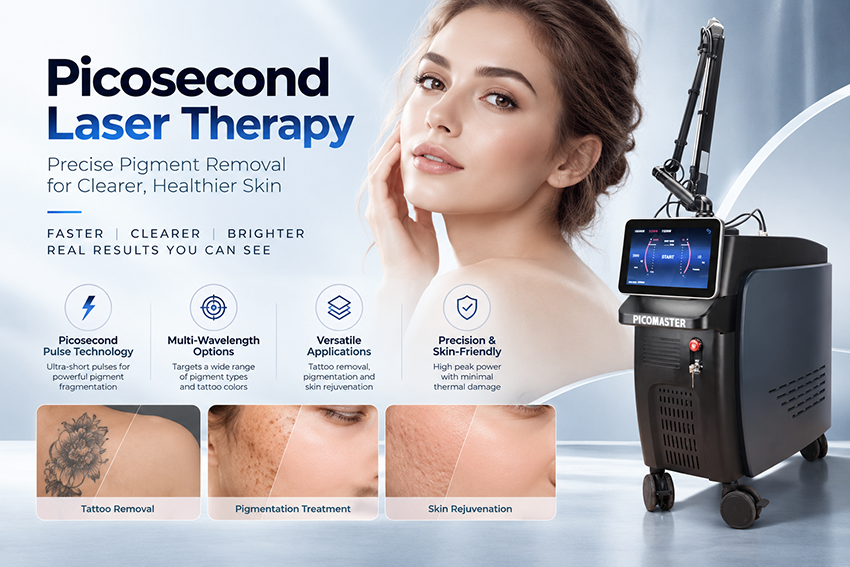
Picosecond laser technology delivers ultra-short laser pulses measured in trillionths of a second (10⁻¹² seconds).
Unlike traditional nanosecond lasers, which rely more heavily on photothermal effects, picosecond lasers generate a strong photoacoustic effect. These rapid pulses transfer energy to targeted pigment particles, causing them to fragment into smaller particles that can subsequently be cleared through the body's natural processes.
By minimizing unnecessary heat diffusion to surrounding tissues, picosecond technology can offer highly precise pigment treatment and support faster recovery for selected indications.
Three Key Treatment Mechanisms:
Photoacoustic Pigment Fragmentation: Ultra-short pulses mechanically break down targeted pigment particles.
Selective Pigment Targeting: Appropriate wavelengths interact with specific tattoo inks and skin chromophores.
Laser-Induced Optical Breakdown (LIOB): With compatible fractional optics, localized microscopic effects may stimulate skin remodeling and improve selected skin texture concerns.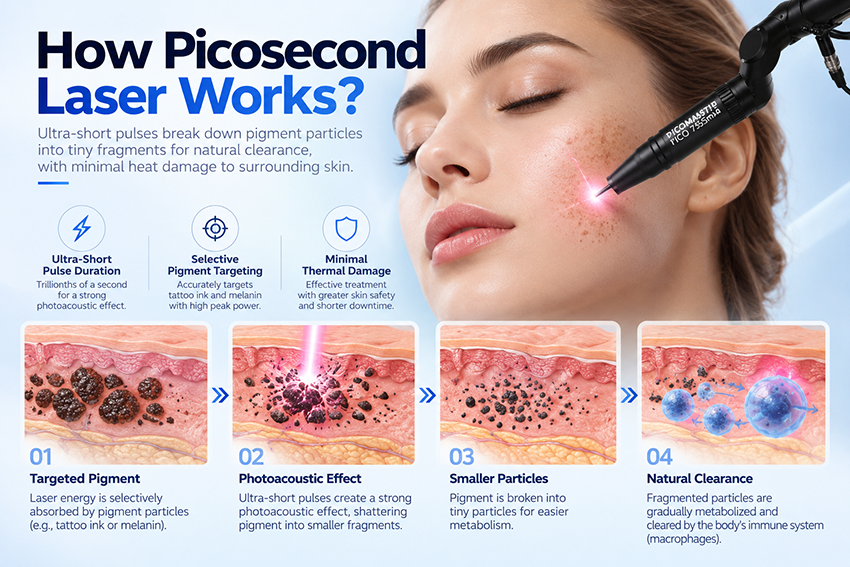
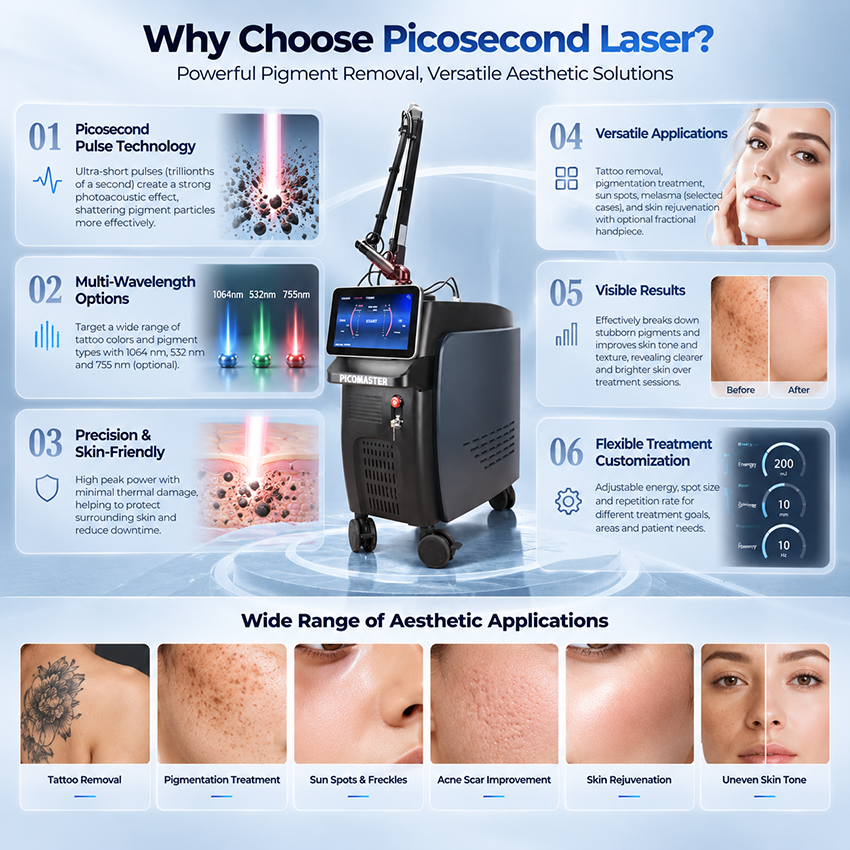
1. Picosecond Pulse Technology – Powerful Photoacoustic Effect
Ultra-short pulse durations deliver energy rapidly to pigment targets, creating a stronger mechanical fragmentation effect than conventional longer-pulse systems under suitable treatment conditions. This is particularly valuable for tattoo removal and selected pigmented lesions.
2. Precision Pigment Targeting
High peak power combined with suitable wavelengths enables targeted treatment of tattoo inks and melanin-containing lesions. Wavelength selection allows practitioners to adapt treatment strategies to different pigment types and depths.
3. Multi-Wavelength Versatility
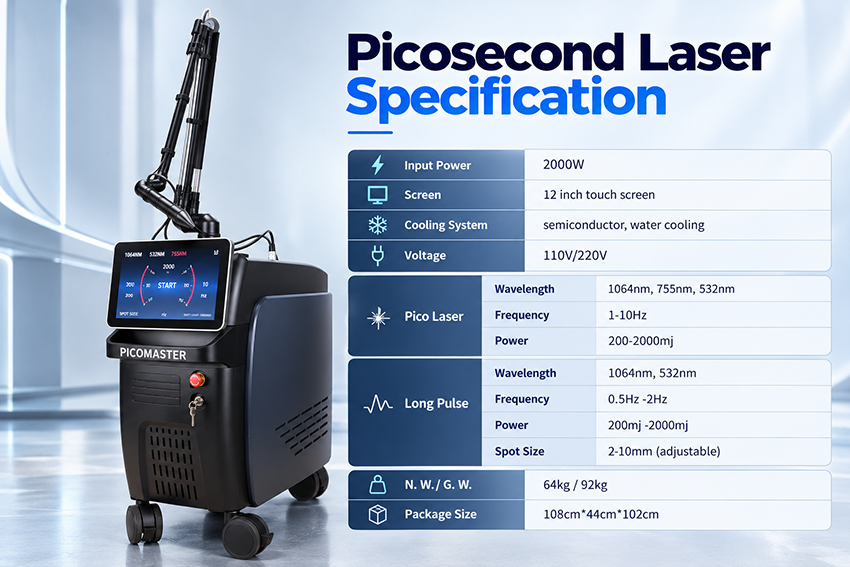
Depending on the configuration, picosecond systems may offer 1064 nm and 532 nm wavelengths, with additional wavelength options on certain models. This expands treatment possibilities across different tattoo colors and pigmentation concerns.
4. Fractional Skin Rejuvenation Capability
Systems equipped with compatible fractional or diffractive optics may support skin remodeling applications, including acne scar appearance and uneven skin texture, without relying solely on traditional ablative resurfacing.
5. Potential for Reduced Downtime
The photoacoustic-dominant mechanism may reduce unwanted thermal exposure in appropriate applications. Recovery time still varies according to fluence, wavelength, treatment area, skin type, and indication.
6. Flexible Treatment Customization
Adjustable energy, spot size, repetition rate, and treatment modes, where supported, allow professionals to tailor protocols to different treatment goals, anatomical areas, and patient characteristics.
|
Treatment Application |
Potential Benefits |
|---|---|
|
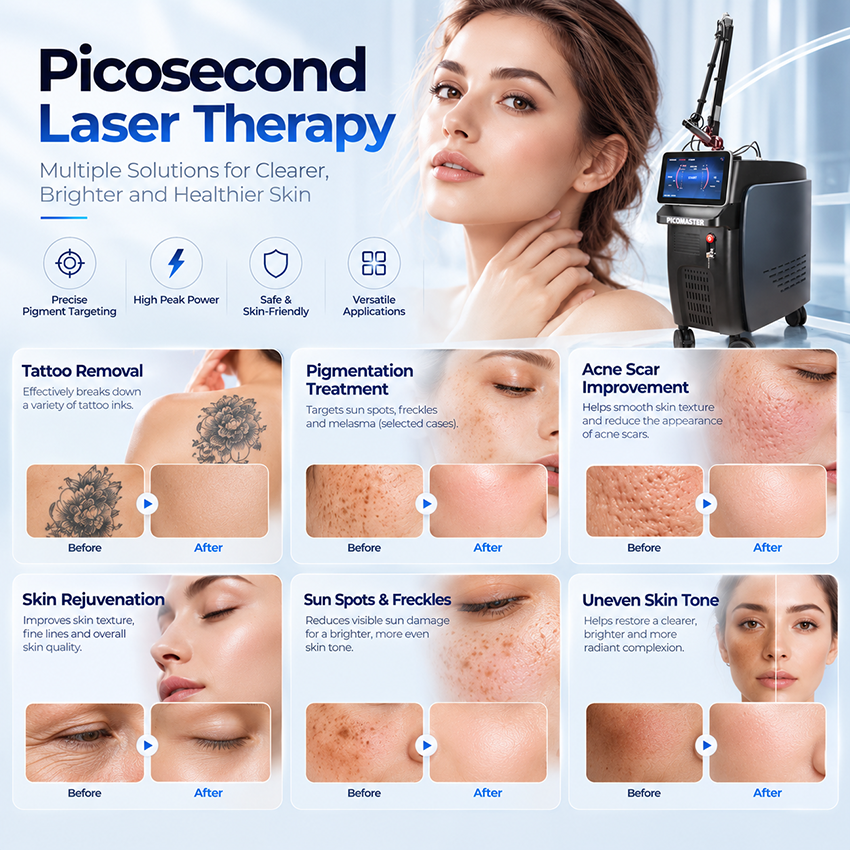
Tattoo Removal |
Targets and fragments tattoo pigments for gradual clearance |
|
Pigmented Lesions |
Treats selected benign pigmentation concerns following appropriate diagnosis |
|
Sun Spots & Freckles |
May improve the appearance of certain superficial pigmented lesions |
|
Uneven Skin Tone |
Supports a clearer, more uniform skin appearance in suitable candidates |
|
Acne Scars |
Compatible fractional systems may improve the appearance of selected acne scars |
|
Skin Rejuvenation |
May improve skin texture and appearance through fractional remodeling |
|
Melasma |
May be considered in carefully selected cases, with recurrence and pigmentation risks requiring particular caution |
One Laser Platform. Multiple Revenue Opportunities. Long-Term Business Growth.
A professional picosecond laser system can help aesthetic businesses expand their service portfolios, attract new customers, and develop recurring treatment revenue.
Expand Revenue Through Multiple Treatments
Offer tattoo removal, pigmentation treatments, and, with appropriate accessories, skin rejuvenation services using one versatile laser platform.
Create Repeat Treatment Opportunities
Many tattoo removal and pigmentation procedures require multiple sessions, creating opportunities for treatment packages and scheduled follow-up visits.
Attract a Wider Customer Base
Serve customers seeking tattoo removal, sunspot correction, and non-ablative aesthetic treatments, helping clinics reach multiple customer segments.
Strengthen Premium Service Positioning
Incorporating genuine picosecond technology can help differentiate a clinic from providers relying exclusively on traditional nanosecond laser platforms.
|
Business Type |
Recommended Service Focus |
|---|---|
|
Dermatology Clinics |
Pigmented lesions, tattoo removal, selected skin rejuvenation |
|
Medical Aesthetic Clinics |
Premium laser treatments and combined aesthetic programs |
|
Tattoo Removal Studios |
Professional tattoo fading and removal services |
|
Medical Spas |
Pigmentation and rejuvenation services where permitted |
|
Plastic Surgery Centers |
Complementary non-surgical aesthetic services |
|
Laser Treatment Centers |
Specialized pigment and tattoo treatment programs |
Q1: What is the difference between a picosecond laser and a traditional Q-switched Nd:YAG laser?
A: The main difference is pulse duration. Picosecond lasers deliver energy in trillionths of a second, while conventional Q-switched lasers typically operate in nanoseconds. The shorter pulses can create stronger photoacoustic effects, potentially improving the fragmentation of certain tattoo pigments and reducing unwanted thermal exposure. Clinical performance depends on the wavelength, energy delivery, target pigment, and specific device.
Q2: How many sessions are required for picosecond laser tattoo removal?
A: Multiple sessions are usually necessary. The number depends on tattoo color, ink density, depth, size, location, skin type, and previous treatments. Professional tattoos may require numerous sessions, and complete removal cannot be guaranteed.
Q3: Can picosecond laser therapy be used for different skin types?
A: Picosecond lasers may be used across different skin types with appropriate wavelength selection and treatment settings. However, darker skin tones can have a greater risk of post-inflammatory pigmentation changes. Professional assessment, suitable protocols, and appropriate eye protection are essential.
Q4: Is picosecond laser treatment painful, and how long is the recovery time?
A: Patients may experience sensations similar to rapid snapping against the skin. Temporary redness, swelling, or mild discomfort may occur. Recovery varies by treatment indication and settings, and some patients may experience blistering, crusting, or pigmentation changes. Cooling and other comfort measures may be used when appropriate.
Q5: Can one picosecond laser machine perform tattoo removal, pigmentation treatment, and skin rejuvenation?
A: Yes, certain multi-wavelength picosecond laser systems can support all three categories. However, skin rejuvenation and acne scar treatment may require specialized fractional optics. The actual available functions depend on the machine's wavelengths, pulse specifications, accessories, and approved indications.
Precision Meets Versatility. Technology Creates Opportunity.
Bring advanced laser treatment capabilities to your aesthetic practice with picosecond technology designed for professional pigment management and tattoo removal.
From targeted pigment fragmentation to advanced fractional skin rejuvenation, a properly configured picosecond laser platform offers a flexible solution for modern aesthetic treatment providers.
Expand Your Treatment Portfolio. Enhance Your Clinic's Competitive Edge. Unlock New Revenue Opportunities.
Contact us today to explore picosecond laser solutions, technical specifications, available configurations, and business opportunities.


