


Advanced Electromagnetic Pelvic Floor Training — Comfortable, Non-Invasive & Hands-Free.
Discover a modern approach to pelvic floor muscle training with our professional Pelvic Floor Muscle Therapy Chair.
Designed to support pelvic floor muscle activation and strengthening, this innovative system uses pulsed electromagnetic technology to stimulate the pelvic floor muscles while the user remains comfortably seated and fully clothed.
Unlike traditional pelvic floor exercises that require active muscle contraction, electromagnetic stimulation can induce involuntary muscle contractions through motor nerve activation.
The treatment offers a convenient, non-invasive approach to pelvic floor muscle conditioning and can complement professionally supervised pelvic health rehabilitation programs.
Ideal for women's health clinics, physiotherapy centers, postpartum rehabilitation facilities, and specialized wellness centers, the Pelvic Floor Therapy Chair combines patient convenience with professional treatment flexibility.


Advanced Electromagnetic Pelvic Floor Training — Comfortable, Non-Invasive & Hands-Free.
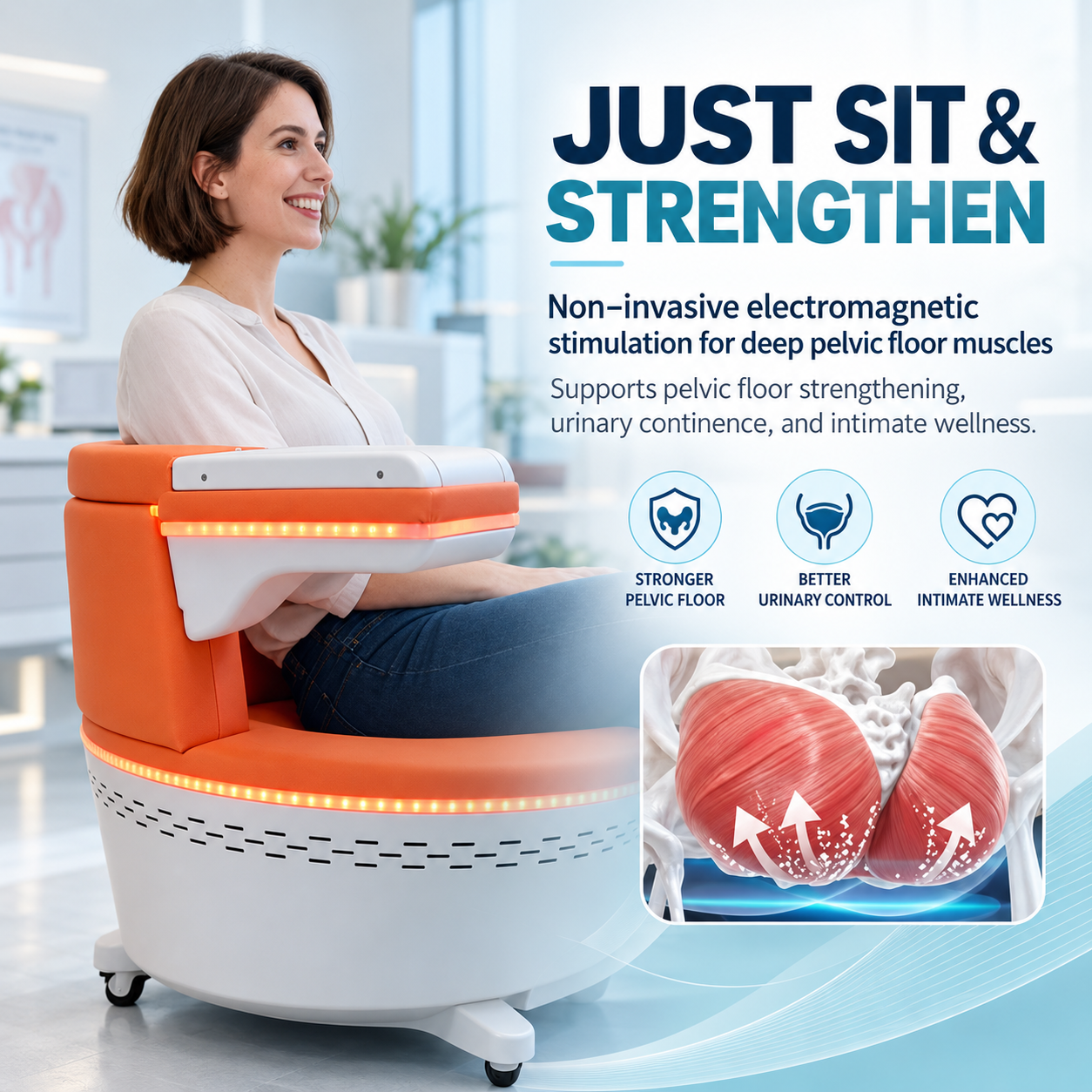
The Pelvic Floor Muscle Chair uses a specialized electromagnetic coil integrated into the seating area.
During treatment, the system generates a changing magnetic field that induces electrical currents within nearby tissues, stimulating the nerves responsible for pelvic floor muscle contraction.
The process involves four stages:
Step 1 – Electromagnetic Field Generation
A coil positioned beneath the seat produces controlled electromagnetic pulses directed toward the pelvic floor region.
Step 2 – Motor Nerve Activation
The changing magnetic field induces electrical activity that stimulates relevant motor nerves.
Step 3 – Pelvic Floor Muscle Contractions
The stimulation triggers repeated involuntary contractions of the pelvic floor muscles without requiring the user to perform every contraction voluntarily.
Step 4 – Muscle Training & Conditioning
Repeated stimulation may help improve pelvic floor muscle activation and support strengthening when incorporated into an appropriate treatment program.
The frequency, intensity, treatment duration, and stimulation pattern influence the resulting muscle contractions and should be selected according to the device's instructions and individual patient needs.
Activate Pelvic Floor Muscles Without Internal Probes.
Unlike some conventional pelvic floor electrical stimulation treatments, an electromagnetic therapy chair does not require the insertion of vaginal or rectal electrodes.
Key Advantages:
Non-invasive stimulation.
No internal probes required.
No surgical procedures.
Convenient treatment experience.
Suitable for professional pelvic floor training programs.
Comfortable Therapy Without Undressing.
Users can remain fully clothed while seated on the treatment chair.
The electromagnetic field is delivered through the seating area, eliminating the need for direct skin contact with conventional adhesive electrodes.
Key Advantages:
Helps maintain personal privacy.
Reduces treatment preparation.
Improves convenience for patients.
May reduce embarrassment associated with intimate-area treatment.
Sit Comfortably While the Technology Works.
Once the user is correctly positioned and the treatment parameters are configured, the chair can deliver programmed electromagnetic stimulation without continuous manual treatment.
Key Advantages:
No continuous hands-on manipulation.
Convenient seated treatment position.
Consistent programmed stimulation.
Supports efficient clinical workflows.
Reduces the need for manual intervention during the session.
Appropriate professional supervision remains necessary.
Target Pelvic Floor Muscle Activation More Effectively.
Some individuals have difficulty identifying or correctly contracting their pelvic floor muscles during traditional Kegel exercises.
Electromagnetic stimulation can produce involuntary muscle contractions without relying entirely on voluntary muscle control.
Key Advantages:
Supports pelvic floor muscle awareness and activation.
May help individuals with poor voluntary muscle recruitment.
Complements pelvic floor muscle training.
Offers an additional option within supervised rehabilitation.
Personalized Training for Different Pelvic Floor Conditions.
Where supported by the device, adjustable stimulation intensity and treatment programs allow practitioners to adapt sessions according to patient tolerance and treatment goals.
Key Advantages:
Adjustable stimulation intensity.
Individualized treatment planning.
Progressive muscle training.
Flexible treatment scheduling.
Simplified Treatment Setup. Lower Routine Consumable Requirements.
The electromagnetic stimulation system does not rely on disposable adhesive electrode pads or internal stimulation probes.
Key Advantages:
Fewer routine electrode consumables.
Simplified patient preparation.
Convenient treatment setup.
Easier integration into clinical workflows.
Routine cleaning, maintenance, and infection-control procedures are still required.
A Practical Complement to Professional Pelvic Health Care.
The chair can be incorporated into individualized pelvic floor rehabilitation programs alongside:
Pelvic floor muscle exercises.
Supervised Kegel training.
Bladder training and behavioral interventions.
Pelvic health physiotherapy.
Postpartum rehabilitation programs.
Electromagnetic stimulation should complement, rather than automatically replace, evidence-based pelvic floor muscle training.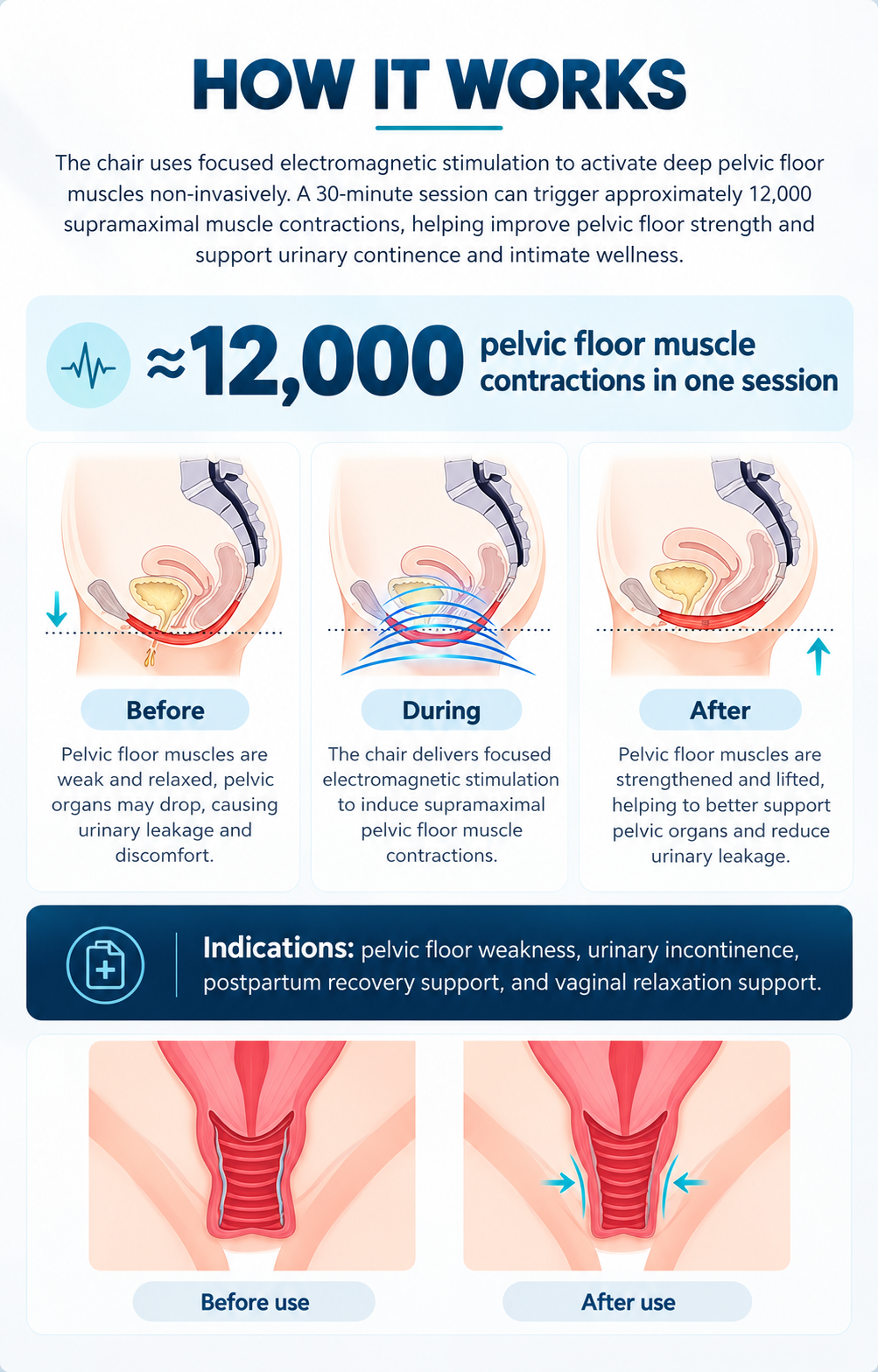
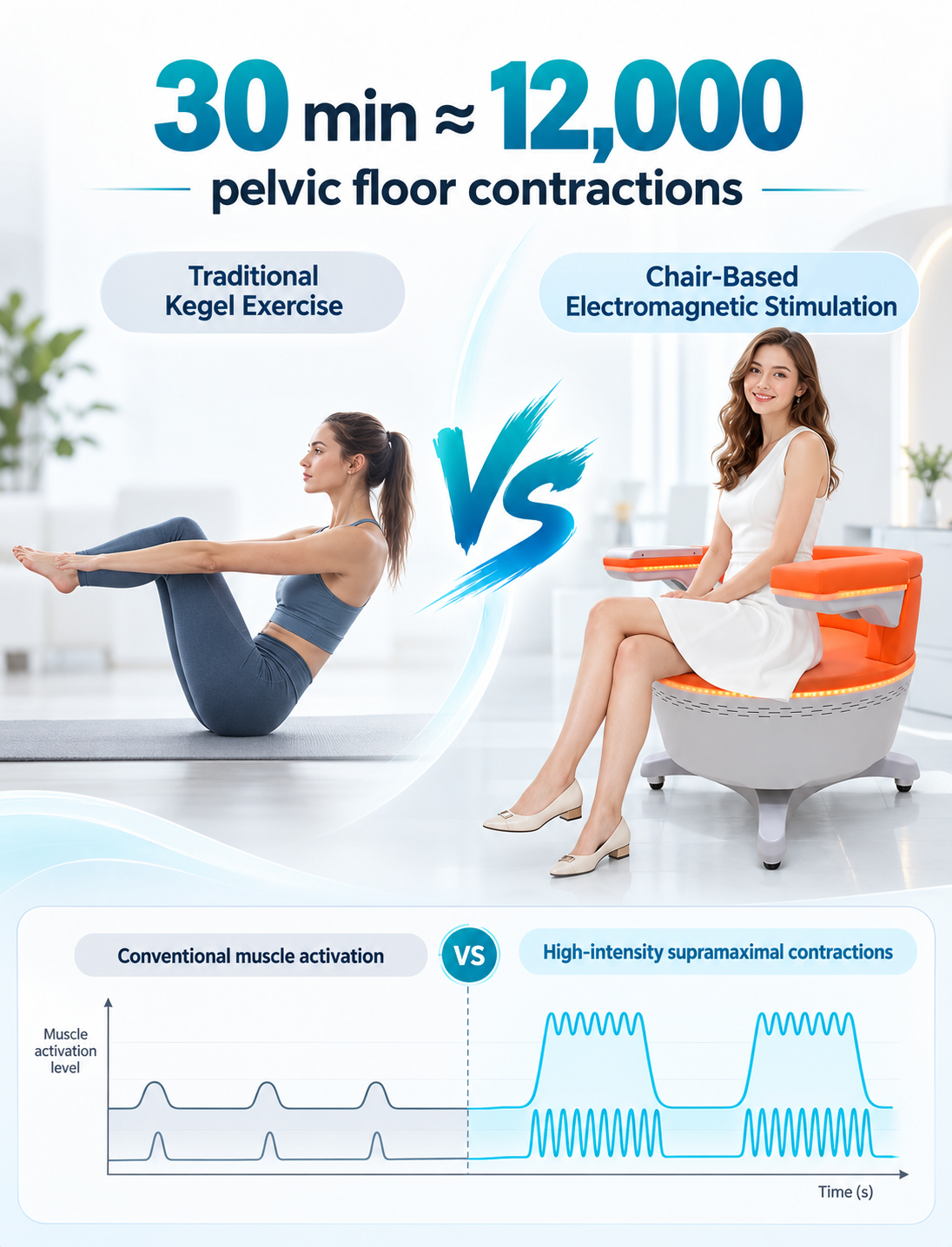
Repeated stimulation may help improve pelvic floor muscle activation, endurance, and strength in suitable individuals.
Some studies of electromagnetic pelvic floor stimulation have reported improvements in urinary incontinence symptoms.
However, clinical results vary, and effectiveness for any particular device or type of incontinence must be supported by appropriate evidence.
After childbirth, some individuals experience pelvic floor muscle weakness or reduced muscle control.
Following appropriate postpartum medical assessment, electromagnetic stimulation may be considered as an adjunct to pelvic floor rehabilitation.
Electromagnetically induced contractions may help certain individuals become more aware of the pelvic floor muscles involved in voluntary training.
The fully clothed, seated treatment format provides a convenient alternative for individuals seeking professional, non-invasive pelvic floor muscle conditioning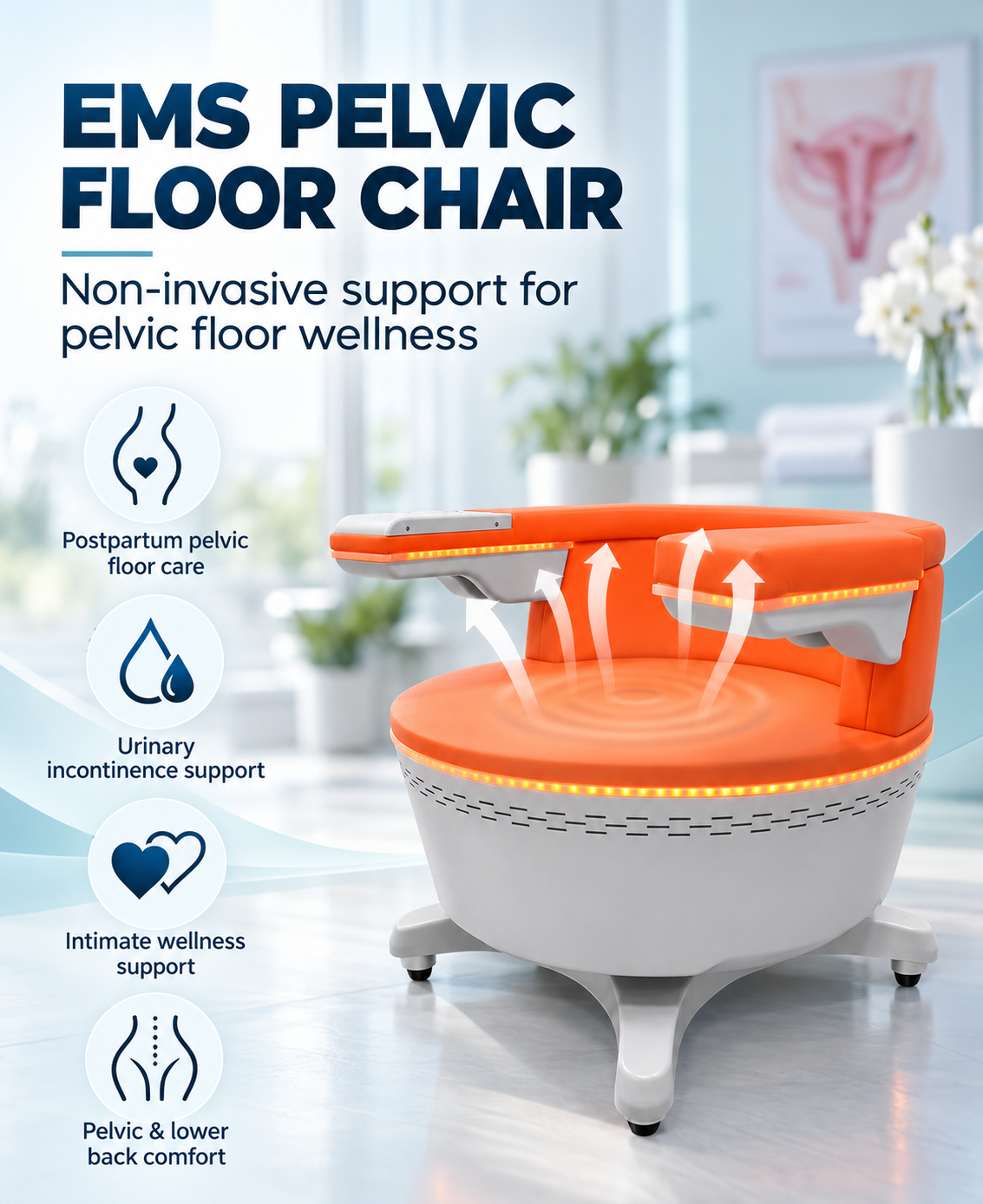
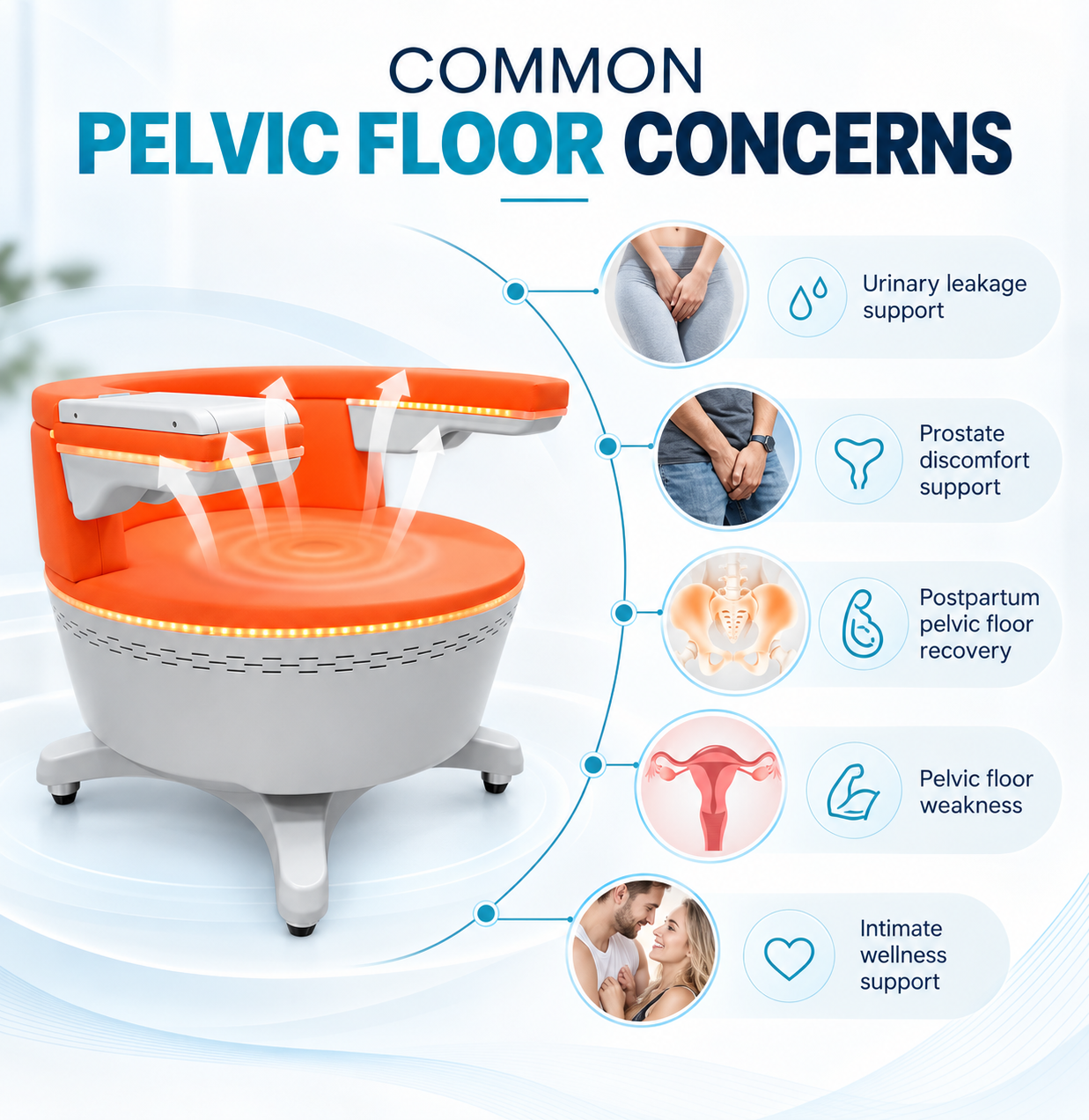
| Application | Potential Treatment Objective |
|---|---|
| Pelvic Floor Muscle Weakness | Support muscle activation and strengthening |
| Stress Urinary Incontinence | May support symptom management in selected patients |
| Postpartum Pelvic Floor Rehabilitation | Complement recovery and strengthening programs after medical clearance |
| Reduced Pelvic Floor Muscle Control | Support neuromuscular activation and muscle awareness |
| Pelvic Floor Muscle Conditioning | Support structured training and maintenance programs |
| Pelvic Health Rehabilitation | Complement supervised physiotherapy and behavioral treatment |
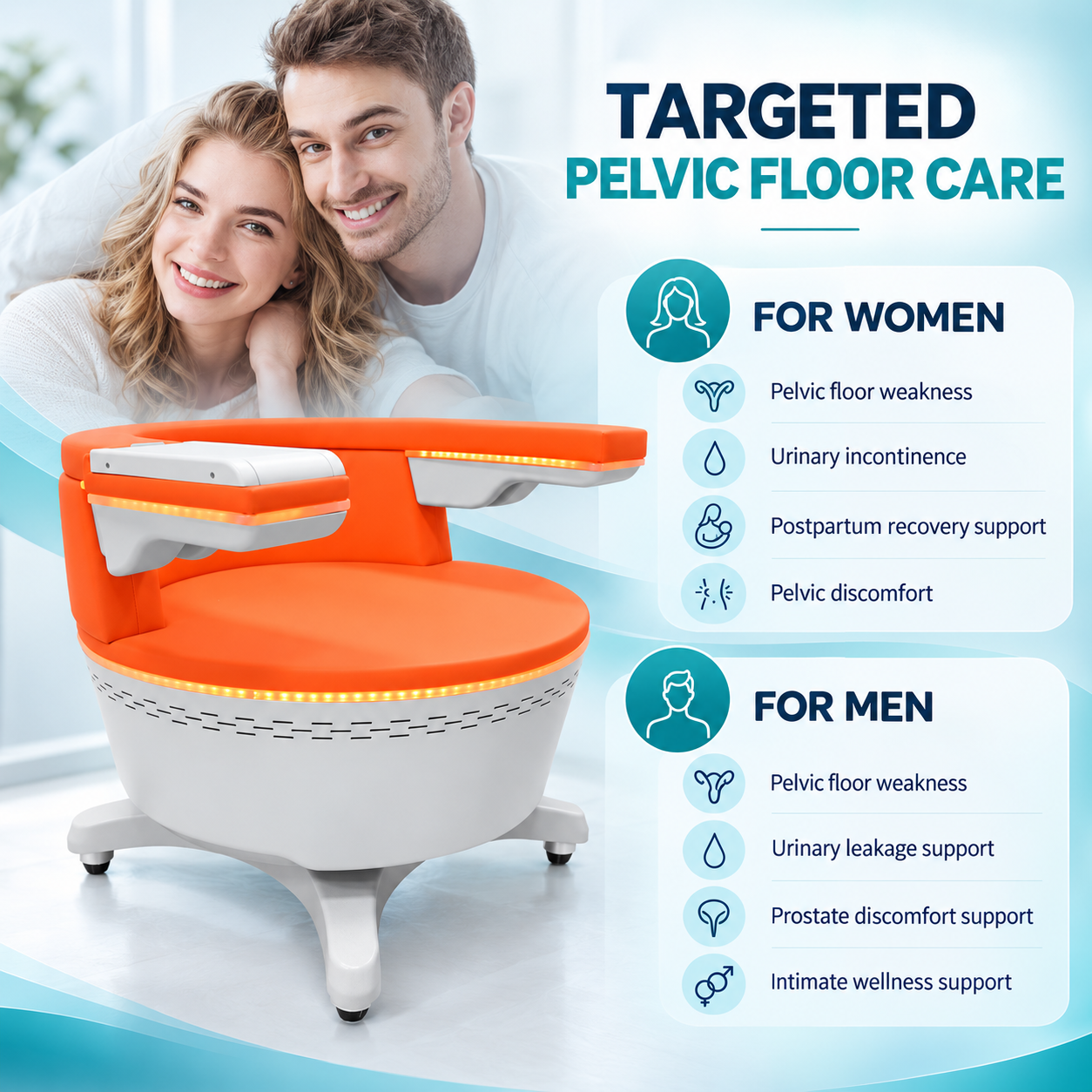
The Pelvic Floor Muscle Therapy Chair provides an opportunity for clinics to expand into non-invasive pelvic health services while offering a comfortable and convenient treatment experience.
Pelvic floor rehabilitation is a distinct service category within physiotherapy, women's health, and selected rehabilitation practices.
Adding an electromagnetic pelvic floor chair can help clinics expand their service portfolio and differentiate their offerings.
The fully clothed, seated treatment experience may appeal to patients who are uncomfortable with internal probes or other intimate treatment procedures.
A more convenient experience may improve willingness to attend appropriate follow-up sessions.
The hands-free treatment format reduces the need for continuous manual manipulation during the stimulation phase.
This allows practitioners to focus on supervision, patient education, and treatment planning.
Pelvic floor rehabilitation often requires repeated treatment and follow-up assessments.
Clinics can offer professionally designed programs with clearly defined treatment objectives and progress monitoring.
Electromagnetic chair treatments generally do not require disposable adhesive electrodes or internal probes.
This can help simplify inventory management and reduce certain routine consumable expenses.
Provide non-invasive pelvic floor muscle training as part of professional pelvic health services.
Complement pelvic floor muscle exercises and individualized rehabilitation programs.
Support selected postpartum pelvic floor recovery programs after appropriate clinical assessment.
Offer an additional non-invasive treatment modality for appropriately selected patients, subject to device indications and clinical evidence.
Expand services involving pelvic floor muscle activation and neuromuscular training.
Provide pelvic floor muscle conditioning services where permitted by applicable regulations and the device's intended use.
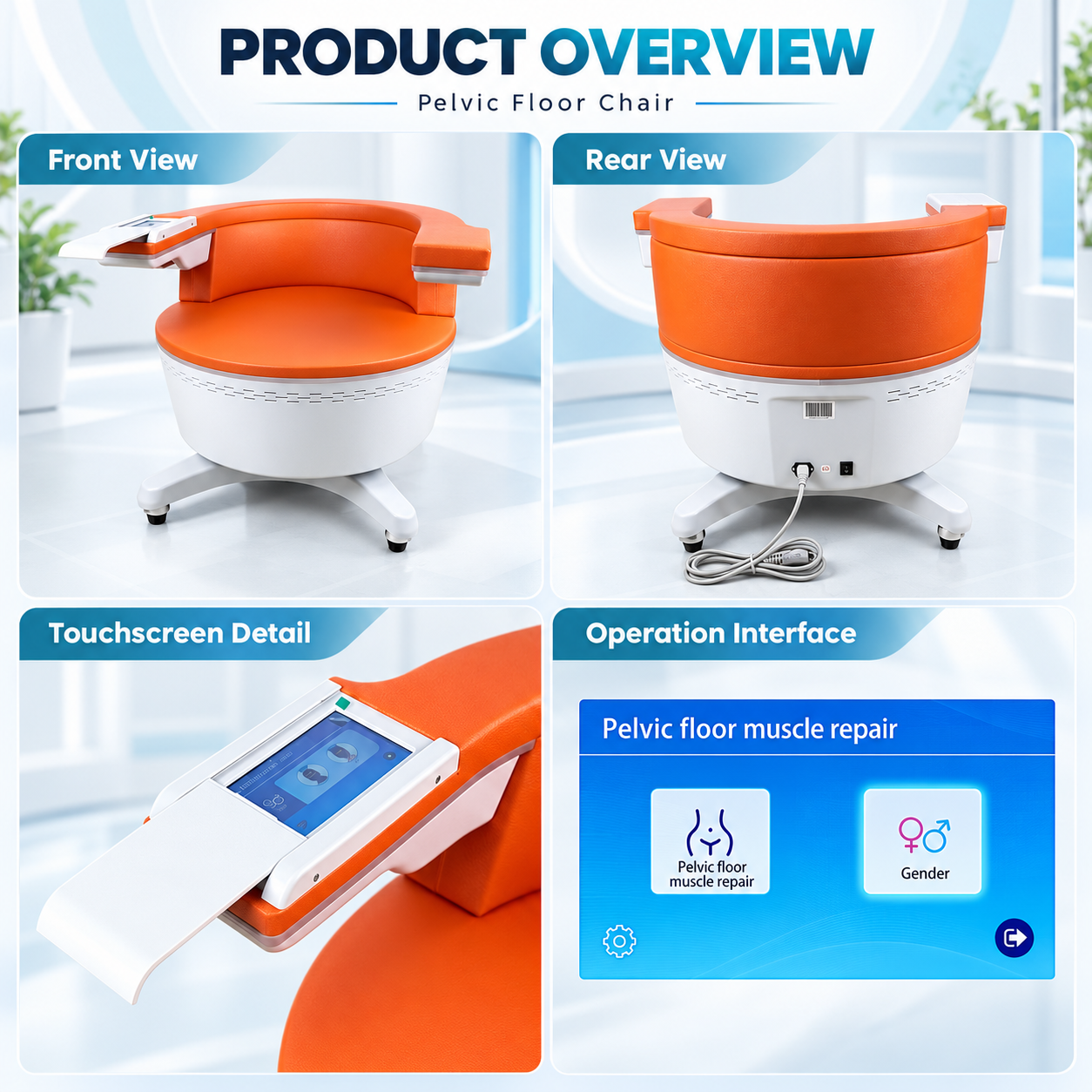
Kegel exercises involve voluntary contraction and relaxation of the pelvic floor muscles.
An electromagnetic pelvic floor chair uses changing magnetic fields to stimulate motor nerves and induce involuntary pelvic floor muscle contractions.
The chair may complement traditional pelvic floor muscle training, but it does not automatically replace supervised Kegel exercises or other first-line treatments.
No. A major advantage of electromagnetic pelvic floor therapy chairs is that patients can usually remain fully clothed during treatment.
Patients sit on the chair while the electromagnetic stimulation system operates beneath the seating area.
Appropriate positioning and clothing requirements should follow the manufacturer's instructions.
Session duration varies according to the device and treatment protocol.
Some electromagnetic pelvic floor systems use sessions of approximately 20–30 minutes, but the actual duration should be determined by the device instructions and qualified practitioner.
The number of sessions depends on the individual's pelvic floor condition, treatment objectives, and device-specific protocol.
Some programs involve multiple sessions over several weeks.
Changes in muscle control or urinary symptoms may require follow-up assessment, and results are not guaranteed.
No. Electromagnetic pelvic floor therapy is not suitable for every patient.
People with pacemakers or other implanted electronic devices, certain metallic implants, or pregnancy may have contraindications depending on the device.
Patients should undergo appropriate screening before treatment.
A qualified healthcare professional should assess suitability, particularly when urinary symptoms may be caused by infection, neurological conditions, pelvic organ prolapse, or other underlying disorders.
Pelvic Floor Muscle Therapy Chair — Non-Invasive Stimulation. Comfortable Training. Professional Pelvic Health Support.
Bring innovative electromagnetic muscle stimulation into your clinic with a professional pelvic floor training solution designed for convenience, privacy, and flexible rehabilitation applications.
Contact Us Today for Product Specifications, Wholesale Prici


